
Life on a country estate
Do you ever dream of a second home where you can occasionally retreat? Unfortunately, this is out of reach for many of us, but in the time of Prince Frederik, it was completely normal for wealthy people to own multiple houses. These countryside houses, known as country estates, were an ideal place to escape the heat and hustle of the city.
A country estate is a luxurious holiday home surrounded by a large park. It consists of a main building with various outbuildings, including separate staff quarters, stables, and a carriage house. Sometimes a country estate also features a bathhouse, alongside vegetable gardens, orchards, water features, and walking paths. For Prince Frederik, Huize De Paauw served as one of his country residences. Together with his family, he sought relaxation there and regularly received his family and high-ranking guests.
A farm as a hobby
Did you know that farms were often part of an estate? Prince Frederik's estates also included farms. The prince leased the farms out, thereby generating income from them. Moreover, the cows and horses in the meadow gave the landscape an idyllic appearance. Furthermore, farming yielded various products such as cheese, milk, and meat. Prince Frederik did not need this income at all, but farms were an inherent part of country life. In addition, the farm could be seen as an attractive element in the landscape. It also typified the Dutch merchant spirit, as pleasure and utility were thus wonderfully combined.
A platoon of staff
Prince Frederik and his guests lacked for nothing. A whole platoon of staff took care of everything for them. Ladies-in-waiting and chamberlains kept the owner and his guests company. At the head of the household was the marshal of the court, who for Prince Frederik was P.H. Count of Limburg Stirum. Aides-de-camp delivered messages, the cooks prepared meals, and a lady's maid for the women and a valet for the men took care of personal grooming (clothing and hair). There were also chambermaids, laundresses, stable hands, coachmen, kitchen assistants, and gardeners. Behind the scenes, therefore, hard work was being done, and for them, a holiday was entirely out of the question!
A clear hierarchy
How hard someone had to work depended heavily on their rank. Ladies-in-waiting and chamberlains were usually of noble birth and formed the entourage of the lord and lady of the house. Their days consisted mainly of endless waiting until they were called upon, and in the meantime, they occupied themselves with drawing, chess, and embroidery. The cook, head gardener, head coachman (boss of the stables), and marshal of the court (head of the household) managed the staff. Consequently, the lower-ranking staff primarily performed the heavy and physical labor.
Living on the country estate
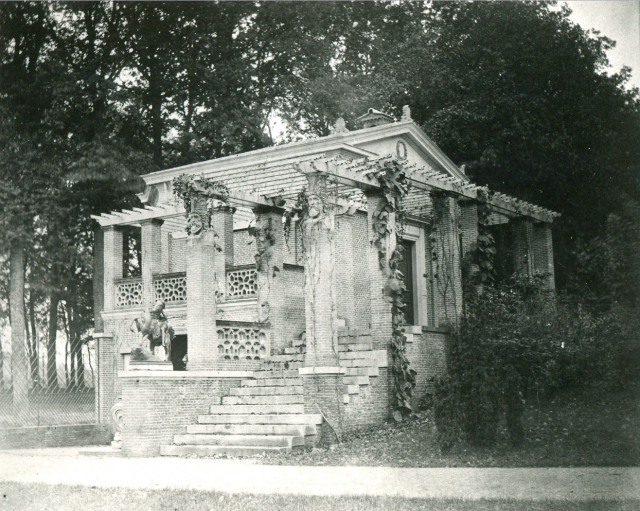
Much of the staff lived on the country estate, either temporarily or permanently. The lower-ranking staff slept in small rooms in the main building or in their homes in the village. The ladies-in-waiting and chamberlains had their own quarters in the country house or partly lived in their own city or country residences. The head gardener and porter lived with their families in service residences. These were located on the country estate and had an attractive appearance. One of the porter's lodges at De Paauw even partially consisted of a teahouse.
When the cat's away…
Prince Frederik was not always at De Paauw. He spent part of the year in The Hague at his city palace on Korte Voorhout, the Hotel de Prince Frederik. He also traveled to his Muskau estate, which is located on the present-day Polish-German border. Some of the staff traveled with him, but by no means all of them. The prince employed head gardeners and foresters at the various country estates to manage his properties when he was not there himself. These individuals ensured that the buildings and the park were well maintained.
In the background
Staff were expected to stay in the background. Huize De Paauw reflects these dynamics well: the grand staircase was intended solely for the owner and his guests, while the staff had their own staircase on the side of the building. Consequently, most staff members had little direct contact with Prince Frederik. Some owners of country estates found employees in their park so unsightly that they had to hide when visitors approached! Prince Frederik did not go that far. He was known as a man who cared deeply for his staff.
Discover it for yourself!
Has these stories made you curious about Prince Frederik's country estates? Then be sure to go out and explore! De Paauw and many service residences can still be admired from the outside. And following its renovation, the interior of De Paauw will be open for public viewing once again.