
Liander's Neighborhood Approach
In collaboration with the Municipality of Voorschoten, grid operator Liander will double the number of electricity substations in the coming years. Thanks to the reinforcement of the electricity grid, residents will continue to have sufficient power in the future.
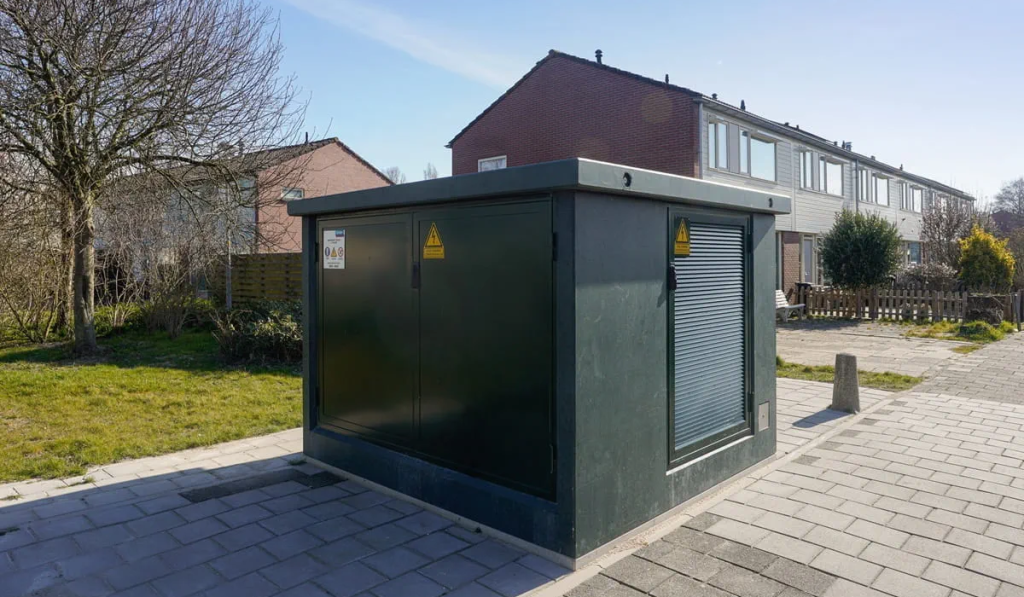
Whether it concerns electric cooking, an electric car, or other electrical household appliances: residents are using more and more electricity. Therefore, grid operator Liander is going to double the number of electricity substations.
Neighbourhood approach
Doubling the number of electrical cabinets is a major undertaking. To carry out this large-scale project, Liander and the municipality have opted for a neighborhood-by-neighborhood approach. This means that Liander will, as much as possible, carry out the work for an entire neighborhood at once and in a customized manner. After all, every neighborhood is different. Consider the geographical layout, such as the historic “ centre ” and pre-war and post-war residential areas. Or think of details, such as the most appropriate color for the utility boxes.
Participation
For each neighbourhood, Liander and the municipality will draw up a neighbourhood realisation plan. This plan outlines how local residents and other stakeholders will be informed about the site selection, design, integration, and implementation phase. The level of participation at this stage is to be informed. At the start of the neighbourhood realisation plan, it can be agreed in consultation with the area manager that local residents are allowed to participate in the design and integration, which is known as contributing ideas.
Additional agreements
In June 2026, Liander and the municipality reached additional agreements. These agreements outline how they will balance the various interests at each neighbourhood . This includes technical requirements, safety, green spaces, parking, and accessibility for management and maintenance. They also agreed on how residents will be informed about the plans in their neighbourhood. This includes a letter to residents with information about the plans, the locations of the electrical substations, and the next steps in the process.
Planning
To be done: Starrenburg
Expected to start in 2029
To be done: Bijdorp
Start to be determined
Want to know more?
When Liander starts working in a neighbourhood, residents receive an information letter. This letter contains details such as the chosen locations and the schedule. The immediate neighbours of a new electricity substation will receive an additional letter with more information about the work.
Would you like to know more? Visit www.liander.nl/elektriciteitshuisjes or www.liander.nl/buurtaanpak. If you cannot find the answer to your question there, you can contact the municipality's project manager, Erik van Noort, at telephone number 14071.
