
Major Maintenance in Adegeest

Last modified on: July 22, 2026

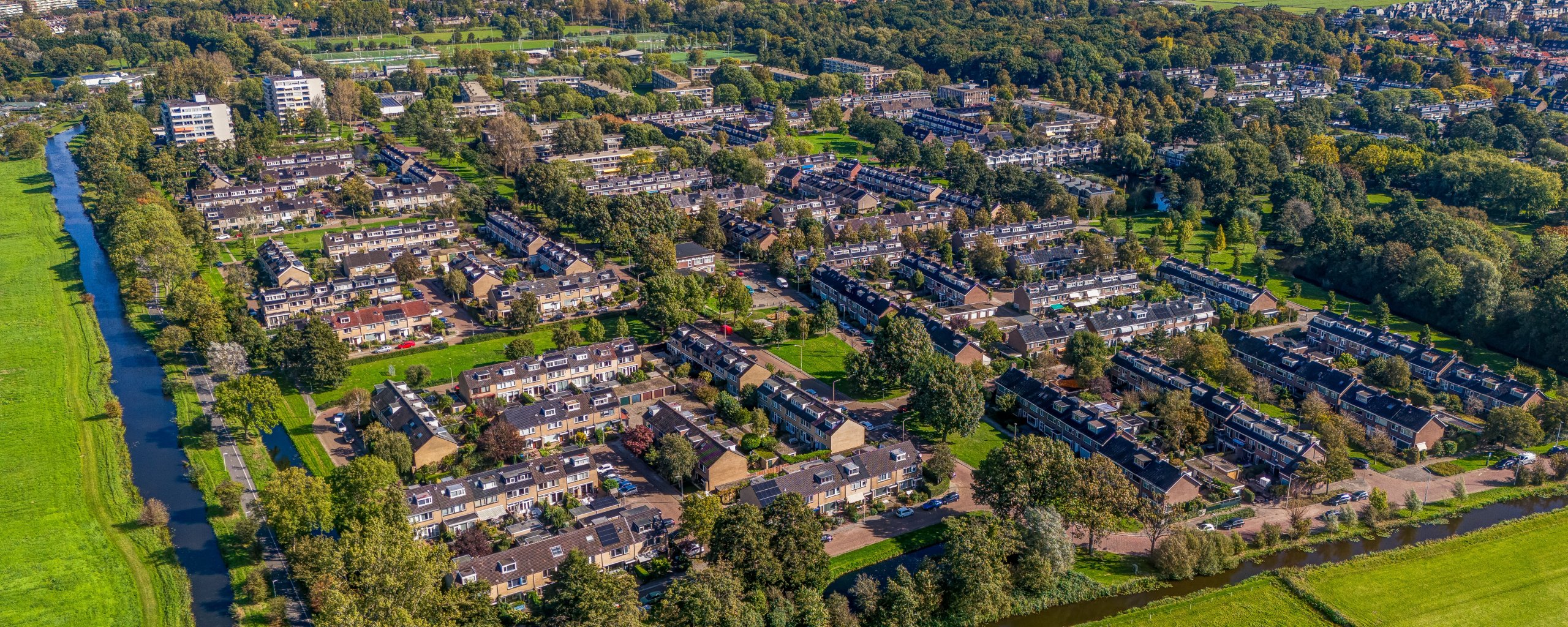
The Municipality of Voorschoten is working on the redesign of public spaces in the Adegeest neighborhood. This is due to necessary major maintenance on the sewer system and road maintenance. On this page, we’ll keep you updated on the latest news. You’ll also find the emergency number, the schedule, and frequently asked questions here.

Sustainable, safe, and climate-resilient

The project in Adegeest offers an opportunity to improve public spaces both functionally and aesthetically. The space will therefore be addressed as a whole. This means that we will also improve green spaces, water features, playgrounds, parking facilities, and traffic safety. For example, the neighborhood will be designed to be sustainably safe (30 km/h zone), with accompanying speed-reduction measures. The design will also be climate-adaptive, making Adegeest resilient to climate change.

Latest News

Pre-shooting of Backyards

Alert Monitoring specializes in monitoring the construction environment. At the end of July, the company will begin preliminary surveys in the backyards of residents in Adegeest. Alert Monitoring will start at the locations where AW Infrabouw will resume major maintenance on the sewer system after the construction industry’s summer break. These locations are on Franz Lisztlaan, Diepenbrocklaan, and Offenbachlaan. Residents will receive a door-to-door letter shortly.

Concerns About Asbestos

Residents of Adegeest are concerned about old sewer pipes that are connected with asbestos sealant. We’d like to put those concerns to rest. These pipes are placed whole into a container lined with tarpaulin and sent to the waste processor as a single unit. They are therefore not crushed or broken up at the construction site. This also means there is no risk of asbestos contamination. Pipes connected with rubber rings, however, are crushed or broken apart.

Up-to-date information

Would you like to stay informed? Download the BouwApp using the QR code below. Then search for “Major Maintenance Adegeest” and click “Add to Favorites.” You’ll then receive all the information about this project. 

The BouwApp

Do you have a question for the municipality? Please send an email toadegeest@voorschoten.nl.

The BouwApp

Emergency Number

In the event of emergencies caused by construction work in the Adegeest neighborhood, contractor AW Groep can always be reached via the emergency number. For example, have you experienced damage to your sewer line or another exceptional event?

Please call 085 109 12 53.
Damage Caused by Subsidence

During the construction work, subsidence has been observed, primarily in gardens and along low walls. We understand that this is inconvenient for the residents affected. We are doing everything we can to prevent this as much as possible.

Have you suffered damage? Please report it. Your reports help us further improve our investigation. On the “Holding the Municipality Liable” webpage, you can find out what information we need. Unfortunately, without that information, we cannot process your report.

The municipality has taken out construction and installation insurance with Centraal Beheer. Centraal Beheer has asked claims adjusters from the firm Lengkeek to investigate the claims.

A claims adjuster from Lengkeek will try to contact you within a few days. All further communication regarding your case will also be handled by the claims adjuster. The adjuster may ask you for additional evidence, such as investigation reports, photos, quotes, or receipts.

Weekly Drop-In Sessions

If you’d like to meet in person, you’re welcome to visit the AW Group office on Richard Wagnerlaan every Wednesday from 2:00 p.m. to 3:00 p.m. During this walk-in session, staff from AW Groep and the municipality of Voorschoten will be available to discuss any questions or concerns you may have about the situation. If you’re unable to stop by, please submit your question via the BouwApp or call 085 109 12 53.

In addition, the municipality is organizing extra drop-in sessions for residents living directly adjacent to the area where the contractor will begin work the following week. Every Tuesday between 4:00 p.m. and 5:00 p.m., you are welcome to visit the AW Groep site office on Richard Wagnerlaan. There, you’ll learn what the contractor will be doing, how the work will be carried out, and what acceptable risks are involved. The residents in question will receive an invitation letter in the mail one week in advance.

Planning

  1. Completed: July 2022

    Forming Neighborhood-Level Working Groups

  2. Completed: August–October 2022

    Working Group Sessions

  3. Completed: December 2022

    Presentation of the concept master plan, including a preliminary design

  4. Completed: May–June 2023

    Preparation and Presentation of the Preliminary Design (VO)

  5. Completed: September–November 2023

    Preparation and presentation of the final design (DO)

  6. Completed: December 2023 – January 2024

    Drafting a contract/specifications

  7. Currently in progress: June 2024 – 3rd/4th quarter of 2026

    Major Maintenance Work, Phase 1

  8. Still to be done: 4th quarter of 2026 – 4th quarter of 2027 / 1st quarter of 2028

    Major Maintenance Work, Phases 2, 3, and 4

Frequently Asked Questions About Odor Nuisance

The Voorschoten City Council regrets that several residents of the Adegeest neighborhood are experiencing odor problems and takes this matter seriously. On this page, we are happy to answer frequently asked questions.

Why is the neighborhood getting a new sewer system?

The existing sewer system is outdated. As a result, an increasing number of problems have arisen. Partly with a view to sustainability, the municipality is switching from the existing combined sewer system to a new separated sewer system.

What is the difference between a combined sewer system and a separate sewer system?

In a combined sewer system, stormwater and wastewater flow together through a single pipe. During heavy rainfall, the sewer system can become overloaded, causing contaminated water to enter surface water via the overflow.

A separated sewer system consists of two separate pipes. The first pipe carries wastewater to the wastewater treatment plant. The second pipe carries relatively clean stormwater directly to surface water bodies, such as canals or ditches.

Why have there been more complaints about foul odors since the work began?

In the old sewer system, the connections had subsided to such an extent that water seals (air barriers) formed between the home and the public sewer. As a result, any sewer odors were less noticeable, even if there was a problem with the ventilation in the home or if the system was porous.

With the new sewer system and the new connections, there is no longer any subsidence or water seals. If something is wrong in the home, odor issues may become more noticeable. This is because, without water seals, these odors are no longer masked. It is therefore possible that these are defects in the home that have existed for some time but are only now coming to light.

What does the GGD say about complaints regarding sewer odors?

The GGD reports that residents have been complaining for some time about sewer odors in their homes. While this smells bad, it does not pose an immediate health risk. However, foul odors can affect how people feel—for example, by causing stress, headaches, or a general sense of discomfort.

A properly functioning drainage system and good ventilation in the home (ventilation grilles and/or windows open when residents are at home) are always important, including when there are complaints about odors.

How can I report a sewer odor?

To report a sewer odor, please contact Martine, the environmental manager at contractor AW Groep. You can reach Martine via the BouwApp, by phone at 085 109 12 53, or by email at adegeest@projectmail.nl.

What does the contractor do once I've filed a report?

The contractor is investigating whether the problem is caused by an improper connection between the public section of the sewer and the section owned by the resident. The contractor is inspecting this all the way down to the crawl space under the house. If the connection is broken or damaged, it will be repaired immediately.

If the connection is in good working order, then the responsibility for any sewer odor lies with the homeowner. In that case, we recommend that you contact a plumber or a drain-cleaning company.

What can a plumber or drain-cleaning company do?

These specialists can check whether the ventilation in your home is working properly or if the system in your home is leaky. They can also determine whether the vent leading to the roof or the gutter is clogged or not properly connected.

How can I get in touch with a plumber or a drain-cleaning company?

The municipal executive is committed to providing residents with the best possible support. We have reached an agreement with Freek van Os to offer a discounted rate for group applications (four homes per application). This involves an inspection/assessment (smoke test) to evaluate the quality of the home’s indoor ventilation system.

The inspection costs 240 euros per home. If four homes sign up at the same time, the inspection costs 200 euros per home. That’s because the contractor won’t charge the 40-euro call-out fee in that case. You don’t have to find three other homeowners yourself! The contractor collects and consolidates all the requests.

Would you like to take advantage of this offer? Please contact Martine, the site manager at contractor AW Groep. You can do so via the BouwApp, by phone at 085 109 12 53, or by email at adegeest@projectmail.nl.

When can I claim a refund for the costs?

The plumber or drain-cleaning company will investigate the sewer odor. If it turns out that the cause is, in fact, an improper connection between the public portion of the sewer and the owner’s portion, you can recover the costs of the investigation.

To seek reimbursement, you must file a notice of liability. On the “Holding the Municipality Liable” webpage, you can find out what information we need. Unfortunately, without that information, we cannot process your report.

Frequently Asked Questions About Land Subsidence

During the construction work, subsidence has been observed, primarily in gardens and along low walls. The Voorschoten municipal council understands that this is a nuisance for the residents affected. We are doing everything we can to prevent this as much as possible. On this page, we are happy to answer frequently asked questions.

Why are we experiencing land subsidence?

Unfortunately, it is not possible to replace the sewer system in peatland areas without some degree of ground subsidence. Based on experience gained from projects in peatland areas elsewhere in the country, and the resulting recommendations from external consultants, the municipality determined that the work could be carried out safely using the current method.

Together with experts, we are now investigating why the actual situation is turning out differently and what measures are needed to continue the work as safely as possible. The municipality is doing everything in its power to minimize ground subsidence so that it causes as little damage as possible to residents of the Adegeest neighborhood.

Why do the groundwater pumps run on the weekend as well?

Sometimes it is technically necessary for groundwater pumps to continue running outside of normal operating hours, for example, to prevent soil instability. Shutting them down temporarily can cause water to flow back, leading to additional subsidence.

We understand the concerns about these pumps running for extended periods. To minimize disruption, the contractor continues to seek the most balanced approach possible to dewatering operations.

What happened on Brucknerlaan?

In January 2026, residents of three homes on Brucknerlaan experienced damage to their sewer lines. An on-site inspection revealed significant variation in the thickness of the peat layer. Fortunately, no sewer pipes broke, but the connectors for the house connections had slipped off the pipes. The contractor repaired the issue immediately.

The cost of the repair work will be covered by the project budget. Therefore, residents will not be responsible for these costs.

What was the problem with the water line?

In January 2026, while removing the sewer line, a drinking water pipe that was buried too close to the existing sewer line was struck. This caused a crack. The leak was immediately reported to Dunea, which repaired it within two hours of receiving the report.

Are the gas, water, and electricity lines actually safe?

In addition to the sewer pipes, there are also utility lines buried in the ground—namely, gas, water, and electricity. Liander conducted additional surveys in the neighborhood regarding these utilities.

Liander has determined that the current method for major maintenance on the sewer system and roads is safe. These are pipes with very strong connections, mostly made of polyethylene. Nevertheless, we continue to monitor these connections on an ongoing basis.

What can I do about an unsafe situation in my yard?

Due to the construction work, some tiles in your yard may be uneven, or you may have difficulty accessing the yard. We can understand that you might find such a situation unsafe.

Are you experiencing this issue? Please report it at the contractor’s site office, via the BouwApp chat feature, or by calling the emergency hotline. The contractor can then assess the situation and help you find a solution.

What does the trial run of the improved procedure look like?

In January 2026, the municipality hired the engineering firm Sweco to analyze the work method. We also asked the firm to propose improvements to the work method so that the follow-up work can be carried out with minimal damage.

In response, the municipality began a trial of an improved method, in which we keep the water in the ground for as long as possible so that it remains in the peat layer or returns to it as quickly as possible. We conducted this trial between two green belts at the end of Brucknerlaan. The initial measurements were positive. We did not observe any unexpected soil subsidence.

In February 2026, work continued on Van Beethovenlaan. There, too, we began testing the improved work method. A letter to residents was distributed regarding this. You can find it at the bottom of this page. At this location, we are encountering more sand and no peat. Consequently, no subsidence has been observed, but we will continue to monitor the soil.

Will there be a second opinion on the chosen approach?

Fugro conducted a soil investigation for the tender for the sewer work in Adegeest. Based on Fugro’s recommendations, we outlined the work procedure in the contract with the contractor.

Following the first liability claims in 2025, the approach was adjusted based on advice from the engineering firm Sweco and in consultation with the Rijnland Water Board: by shortening the work site, the period during which groundwater was extracted was reduced.

The modified method worked as expected, until the damage occurred on Brucknerlaan. We then halted the work and asked Sweco to propose a method that is even better suited to the nature of the soil.

In March 2026, the engineering firm Movares reviewed Sweco’s proposed measures and approved them. The contractor is therefore continuing the work based on a procedure that has been reviewed by three parties.

Will there be an independent claims office?

There will be no independent claims office. The municipality will remain the point of contact for liability claims. These liability claims will be handled by the independent claims assessment firm Lengkeek.

Are all damages fully reimbursed?

Damages that can be proven to have been caused directly by the sewer work will be compensated. The municipality will primarily follow the advice provided by the independent claims adjuster Lengkeek. Anyone is free to have a second opinion prepared at their own expense.

Claims covered by insurance will be paid by the insurer Centraal Beheer. Other damages will be covered on a provisional basis through the municipality’s project budget. 

Other Frequently Asked Questions

The Municipality of Voorschoten is working on redesigning the public spaces in the Adegeest neighborhood. Many questions concern odor problems and land subsidence. On this page, we’re happy to answer the other frequently asked questions.

Why is there a section of gravel road on Bachlaan instead of regular pavement?

The section of gravel road (a mix of sand and stones) was installed because we will be renovating (paving) Bachlaan last. We are doing this last because we do not need to replace any sewer lines on Bachlaan and because it is a major thoroughfare.

Once all the work in the neighborhood is complete, we will redesign Bachlaan so that residents can easily follow a detour through the neighborhood.

If we were to pave that section of the gravel road right now, Bachlaan would have to be partially closed, and traffic would therefore be rerouted through the neighborhood. That would cause problems because construction is still underway everywhere.

Has contaminated soil been found?

An elevated concentration of gasoline was detected near the gas station on Van Beethovenlaan. We have notified the Environmental Agency and submitted a request, along with an action plan, to proceed with further steps.

The Environmental Agency has approved the action plan, so we can resume work. Remediation is not necessary. We will inform the stakeholders as soon as possible.

The service road will remain accessible to the stores on a “half-and-half” basis. We will be in direct contact with the store owners throughout the construction work. Barring unforeseen circumstances, the work will continue for several more weeks.

How can I get a rainwater drainage tile or a rain barrel?

Rainwater is collected in the storm sewer system, which is connected to the wadis and ultimately to the waterways as well. Where technically feasible, stormwater drainage tiles were installed in the renovated streets. Each resident was also offered a rain barrel. The contractor has since delivered the rain barrels to the residents who wished to use them.

Residents who would still like to receive a rain barrel or, if technically feasible, have a rainwater drainage tile installed can let the environmental manager know during the weekly walk-in office hours or by emailing adegeest@voorschoten.nl.

What is the STOMP principle?

The STOMP principle refers to the order of five modes of transportation used to depict a new traffic situation:

  1. Steps (pedestrian)
  2. Pedaling (cyclist)
  3. Public Transportation
  4. Mobility as a Service (bike-sharing and car-sharing)
  5. Private car

In addition to this guideline, the design also takes into account the accessibility of emergency services, such as ambulances and the fire department.

What are a preliminary design, a final design, and a construction design?

Preliminary Design 

A preliminary design is the first drawing created during the design process. A key objective is to translate requirements into a visual representation. During the development of the preliminary design for Adegeest, there was an opportunity for collaboration (co-production) between residents and the municipality.

Final Design

A final design is the phase that follows the preliminary design and meets the requirements of a construction drawing. Carefully measuring and calculating dimensions and the associated costs clarifies what is and isn’t feasible in practice. This allows for a more realistic design to be drawn up. A final design also specifies the various materials to be used. It is therefore more detailed than a preliminary design. The city council is informed about the final design.

Detailed Design 

A construction drawing is a detailed drawing. It follows the final design and serves as a guide for the contractor who will carry out the work.