
Six Municipalities Join Forces to Combat Low Literacy
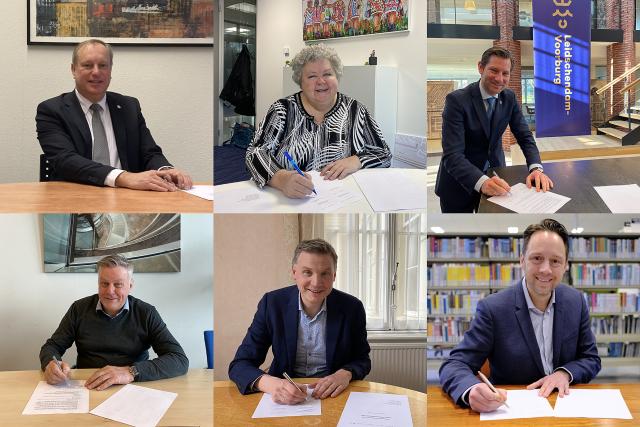
Working together to tackle low literacy. This means helping people who struggle with reading, writing, or math to catch up. To that end, the municipalities of Lansingerland, Leidschendam-Voorburg, Pijnacker-Nootdorp, Voorschoten, Wassenaar, and Zoetermeer—united in the Central South Holland region—signed an agreement today. In this region, approximately 8% of the population is functionally illiterate.
Low literacy refers to the lack of sufficient basic skills in language, math, and digital literacy. According to an estimate by the Netherlands Court of Audit, 2.5 million people in the Netherlands are functionally illiterate. For about two-thirds of them, Dutch is their native language.
Stopping by the library
People with low literacy skills face challenges in several areas. For example, they have difficulty finding work, struggle with administrative tasks, are unable to read letters from the tax authorities or the municipality, or have trouble following instructions from a doctor, pharmacist, or other healthcare provider. As a result, people with low literacy skills are more likely to experience financial or health problems.
“In our village, too, we want everyone to be able to participate,” says Paul de Bruijn, Alderman , who is signing the partnership agreement on behalf of Voorschoten. “I warmly invite any resident who wants to improve their reading, writing, or computer skills to stop by the library. The staff and enthusiastic volunteers there will be happy to tell you about the options that are right for you.”
A wider selection for residents
Low literacy requires a clear approach and a long-term commitment. A cooperation agreement was already in place in the Central South Holland region, but it expired last year. One achievement the municipalities are proud of is the standardization of the educational system, which is now implemented uniformly across the region. “By collaborating regionally, the municipalities can further expand the range of programs available, giving residents a wider choice and making it easier for them to transition into the education system when they move,” the aldermen explain.
With the new agreement, the six municipalities are further refining their ambitions and goals. For example, the signatories are defining in even greater detail how they will divide responsibilities, how they will continue to organize education, how they will consult and make decisions, and what financial resources they will allocate. Regional thematic meetings are also being organized to share knowledge and experience regarding the identification of low literacy. These are intended for consultants, for example, but also for volunteers.