
Police Warn of Scams Involving Small Talk
Using a conversation scam, con artists repeatedly deceive their victims—who are often elderly—and thus steal money and jewellery . For example, these criminals claim to work at a bank or even for the police to gain their victims’ trust. There have also been recent reports in the Leiden-Bollenstreek district of people being scammed in this way. The police are issuing a strong warning about this type of scam.
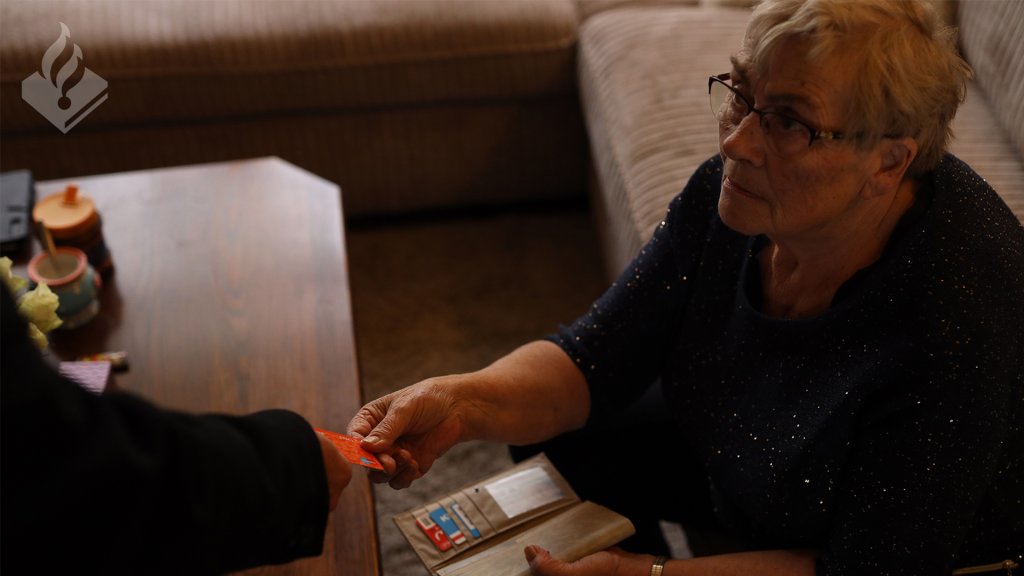
Do you have an elderly family member, acquaintance, or neighbour? Make sure they’re aware of this type of scam and prevent them from falling prey to these kinds of scammers.
Friendly and trustworthy
Con artists use various tricks to try to swindle people out of money and valuables. For some time now, they have been using scams in which they pose as bank employees or police officers; sometimes they even misuse the name of a local community police officer. Scammers come across as friendly and trustworthy, with the intention of winning over their victims. They prepare their story carefully so that they can present it credibly to their audience. In this way, criminals manage to make off with a lot of money, but they also often cause significant emotional harm to their victims.
Scammers take their time
The scammers really take their time to gain the trust of their intended victims. They call people and tell them, for example, that there has supposedly been a suspicious transaction, but that the bank will, of course, help the victim. Such a phone call can sometimes last for hours, during which the scammers manage to gain people’s trust. For example, by claiming that burglars know where someone lives, they try to scare the victim.
At the door
Eventually, people reveal their PIN, and the scammer asks the victim to put their bank card in an envelope. They’re then told that someone from the police or the bank will come to pick up that envelope shortly. People are also advised to include any valuables—such as jewellery —so that those can be kept safe as well. “When you read it like that, you’d think you’d never fall for it if it happened to you,” says a police spokesperson. “But don’t underestimate how sophisticated these scammers are! They take their time, strike up a friendly conversation with their victim, and in this way manage to gain people’s trust and actually convince them that they’re from the bank. Especially if someone then shows up at the door at the agreed-upon time and also presents themselves in a professional manner.” In some cases, thousands of euros are withdrawn from the victim’s bank account in this way, and people may even hand over valuable jewellery —sometimes belonging to deceased family members. Although this can happen to anyone, it is primarily older adults who are targeted.
Police
The police, your community police officer, or your bank will never come to your door to pick up your cards or other valuables! Let alone ask you to give them your PIN. So if someone calls and asks for this, they’re a scammer. Hang up immediately! If you’ve been contacted by phone, call the police at 0900 – 8844. If someone actually comes to your door with a suspicious story, don’t engage with them and call 112 right away.
Warn the elderly
Everyone can help make things as difficult as possible for scammers. Tell your parents, grandparents, or older neighbours that chat scams happen regularly. And that it’s not at all rude to hang up or refuse to let strangers in—especially if they feel that something isn’t right. Advise them to call the police immediately in such cases.
Prevention Tips
On the police website, you’ll find a special page dedicated to “chat scams” at , which explains how to prevent them and what to do if you’ve unfortunately become a victim. The police aim to raise awareness about the risks that can lead to theft through chat scams. The page also includes tips to help older adults increase their own safety.