
Baby trees
To celebrate the birth of your child, we will gift you a tree. You can plant this tree in your garden, place it on your balcony, or keep it inside your house. Planting the tree in public spaces is not permitted. A tree is a wonderful way to celebrate the birth of your child. By planting this birth tree in your garden, you help nature in Voorschoten and keep your living environment cool during hot summer days.
Twice a year, the municipality distributes baby trees, in March and September. The reason for this is that these are favourable moments for planting a tree. Following the birth of your child, you will receive a letter from us containing your unique tree collection number. You will need this number to register for a baby tree. De first distribution took place in March 2025.
Registration
You can register for the baby tree and submit your choice by sending an email to babyboom@voorschoten.nl containing the following information:
- The tree collection number stated on your letter
- The tree of your choice
- Your email address.
Choosing a baby tree
Below are the six trees you can choose from.
Silver birch - Betula pendula
The silver birch can grow to a height of 15 to 30 metre s and grows quickly compared to other trees. The tree crown is oval/elongated and semi-open. In April, yellow-green catkins (soft, elongated “flowers”) appear. In the fall, the leaves turn yellow. The trunk is white and peels, resulting in patches of blackish-green. The tree serves as a food source for butterflies.
Raising levels, soil compaction, and fluctuating water levels have a negative impact on the health of the silver birch. The silver birch prefers dry soil.
The tree you will receive is 80 – 125 cm in height.
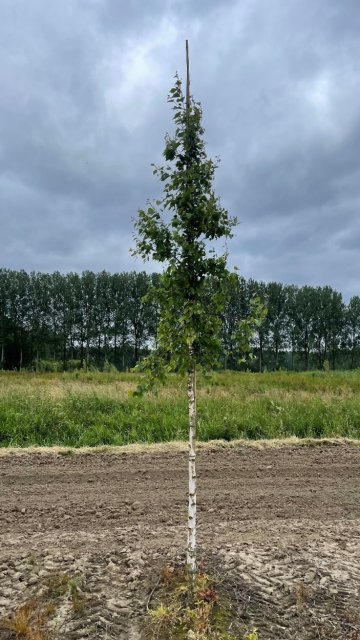
Turkish hazel - Corylus colurna
The tree hazel, also known as the Turkish hazel, grows to a height of about 20 metre . This tree has an average growth rate. The crown is broadly oval to conical and semi-open. A mature tree can therefore provide ample shade. In February/March, yellow-brown catkins grow on a male tree hazel. On a female tree hazel, the small red flowers are inconspicuous. The Turkish hazel can also produce edible nuts in the fall. The tree’s trunk has grey , cork-like bark. The tree serves as a food source for bees.
The Corylus colurna is a hardy tree with low susceptibility to disease that thrives in loose soil and requires little moisture.
The tree you will receive is 80 – 125 cm in height.
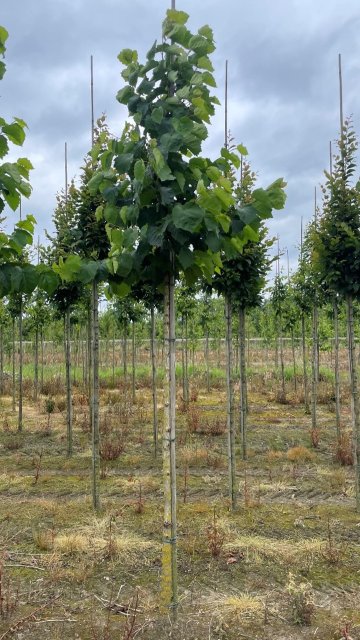
Pedunculate oak - Quercus robur
The English oak grows to a height of 25 to 30 metre s and has an average growth rate. The crown is round and semi-open. In May, greenish-yellow catkins 2–4 cm long appear on male English oaks. In the fall, acorns form on the tree. The bark is dark gray. In the fall, colours the leaves turn yellow, orange, or reddish. This tree serves as a food source for butterflies and birds.
The Quercus robur can grow in wet soil and is resistant to brief floods.
The tree you will receive is 80 – 125 cm in height.
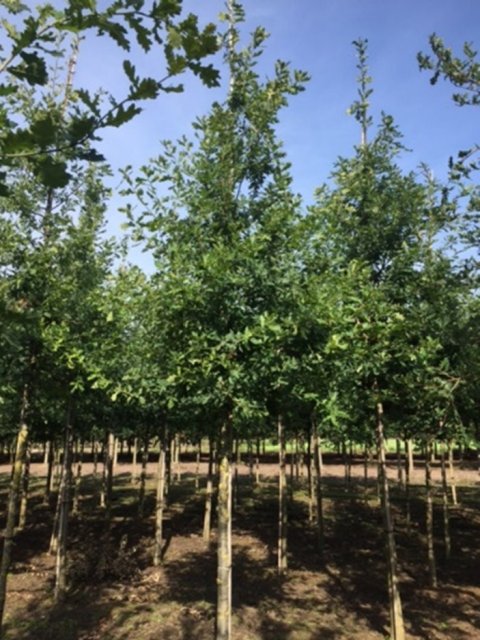
Common alder - Alnus glutinosa
The common alder, also known as the black alder, can grow to a height of 10 to 20 metre and grows rapidly compared to other trees. The tree’s crown is conical to oval and semi-open. In March/April, brownish-yellow catkins appear on the male black alder; the female catkins are oval and inconspicuous. Starting in September, egg-shaped alder cones appear on the tree, which can be used for decorative purposes. The tree’s bark is grey and grooved. In winter, colours the tree’s leaves turn yellow and brown.
The common alder grows well in wet soil and is resistant to floods.
The tree you will receive is 80 – 125 cm in height.
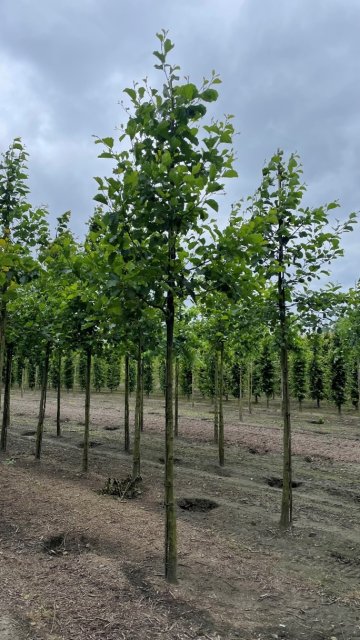
Common hawthorn - Crataegus monogyna
The single-stemmed hawthorn grows to a height of 6–8 metre . This tree/shrub has an average growth rate. The crown is round or spherical and semi-open. The branches grow irregularly; the plant has thorns, and the bark is brown/grey. In the fall, the tree turns yellow; in May, it blooms with white, fragrant flowers; and in August/September, red berries appear. The single-styled hawthorn serves as a food source for butterflies, bees, and birds such as thrushes, blackbirds, and titmice.
This hawthorn prefers nutrient-poor, loamy, or sandy soil. This tree/shrub tolerates dry periods well. However, young plants need water during prolonged dry spells to establish their root systems properly.
The tree you will receive is 80 – 125 cm in height.
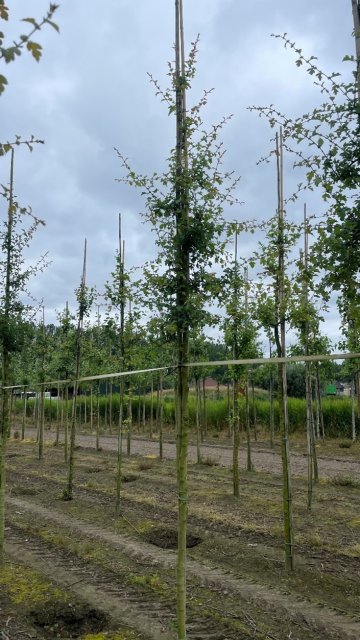
Bay laurel - Laurus nobilis
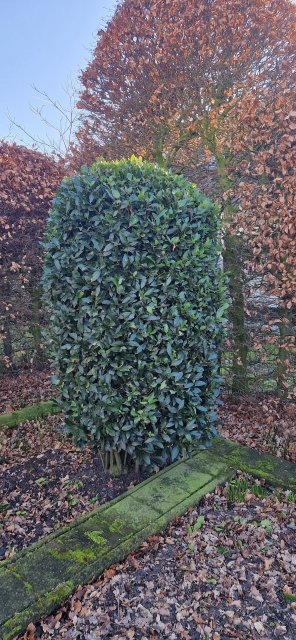
The laurel can grow to a height of 6–12 metre . This tree has an average growth rate. The crown is conical and dense. The trunk has brown bark. This tree remains evergreen in winter, and greenish-yellow flowers appear in March/April. The plant can be used in the kitchen as a herb for stews and soups. In the fall, black/blue berries will grow on the bay tree; these are not edible. If you prune the tree sufficiently, you can keep it small, making it suitable for your balcony or as an indoor plant.
The bay laurel tree prefers well-drained and dry sandy soil, preferably rich in humus.
The tree you will receive is 30 – 40 cm in height.
More information
Approximately one week prior to the day you can collect your tree, we will send you an email reminder. If you are unable to collect the tree on the designated collection day yourself, you may have someone else collect it on your behalf.
Planting a tree
What should I keep in mind before planting a tree?
When planting the birth tree, it’s important to space it at least 2, metre s from the property line. It’s also a good idea to consider the mature crown size and think about whether this tree will fit in your garden in the long term. You should also make sure to choose the right type of soil and that the tree is suitable for the location you have in mind. For example, if you have a tree that doesn’t like wet soil, don’t plant it in a garden that’s often waterlogged.
What should I keep in mind when planting a tree?
For all trees, it is best to plant them in March/April or October/November. When planting, ensure that the hole for the plant is at least one and a half times as wide as the roots. The depth of the planting hole should be approximately the height of the roots, but just slightly less.
Loosen the soil at the bottom of the planting hole, and the sides as well if necessary. This will allow the roots of your young tree to grow better. You can fill the planting hole around the roots with garden soil. Health Make sure the entire trunk remains above ground after planting.
What should I pay attention to after planting the sapling?
After planting, your sapling will need extra water for at least the first two years. To ensure the water reaches the roots effectively, you can use a watering basin made of soil or plastic. The diameter of the watering basin should match the area where the roots are located. During dry weather, the moisture of the soil next to the roots should be checked weekly. If the soil is not moist enough to meet the tree's water requirements, it is helpful to give the tree a large amount of water at once, rather than small amounts frequently. Roots of newly planted trees benefit most from staying moist throughout the entire growing season, but not excessively wet. Too much water can cause a tree to die from a lack of oxygen or root rot.
A newly planted tree can blow over and lean. To prevent this, the tree can be secured between two stakes. Once the tree is large enough, you can drill 2 or 3 holes in the ground right next to the roots. Next, the tree stakes must be firmly driven into the ground. A tree tie can then be placed around the trunk from each stake. The tree ties should not be loose, nor should they be under tension. The tree ties must be nailed to the tree stake. After 3 years, the trees are sufficiently established to continue growing without support.